Stainless Steel 317L Slotted Pipes: Precision Solutions for Corrosive Industrial Applications
Stainless Steel 317L Slotted Pipes Manufacturers in Mumbai serve industrial buyers looking for corrosion-resistant slotted piping for filtration, screening, drainage, and controlled-flow applications. The 317L grade combines chromium, nickel, and molybdenum with a low-carbon composition, making it a practical choice for selected environments where localized corrosion resistance and reliable fabrication are important.
For procurement teams working on projects across Europe, the Gulf, and the wider Middle East, selecting a slotted pipe requires attention to more than the stainless steel grade. Slot dimensions, pipe diameter, wall thickness, surface finish, manufacturing method, inspection, and traceability can all affect the final performance. A clear specification helps buyers source a product that matches both the process requirements and project documentation.
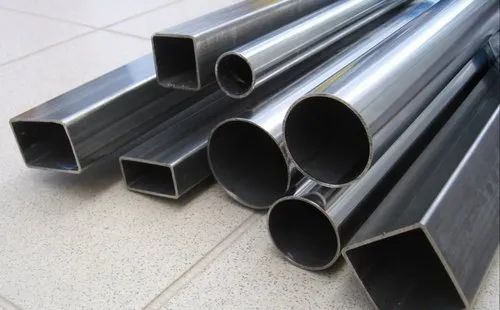
What is Stainless Steel 317L Slotted Pipes?
Stainless Steel 317L is a low-carbon austenitic stainless steel with chromium, nickel, and molybdenum as its principal alloying elements. Its higher molybdenum content provides improved resistance to pitting and crevice corrosion compared with many conventional austenitic stainless steel grades.
The “L” designation refers to the lower carbon content. This characteristic is useful for fabricated and welded components because it helps reduce the risk of sensitization associated with welding.
A slotted pipe contains precisely formed openings along its surface. Manufacturers can produce different slot widths, lengths, spacing patterns, orientations, and open-area percentages according to the intended application.
These pipes can be used for:
- Industrial filtration systems
- Chemical processing equipment
- Water and wastewater treatment
- Petrochemical installations
- Pulp and paper processing
- Strainers and screening systems
- Process drainage
- Separation equipment
- Corrosive fluid handling
Stainless Steel 317L carries the UNS S31703 designation. Buyers should specify this clearly when preparing purchase documents, especially when the project also involves other 317-series stainless steel grades.
Common International Standards Used Alongside Stainless Steel 317L Slotted Pipes
International buyers generally specify the base pipe according to recognized standards covering material, manufacturing, dimensions, and testing. The correct standard depends on whether the pipe is seamless, welded, fabricated, and how it will be used.
ASTM A312/A312M is commonly associated with seamless, welded, and heavily cold-worked austenitic stainless steel pipe for high-temperature and general corrosive service. Where ASME requirements apply to the project, the applicable ASME specification may be referenced alongside the relevant material standard.
European projects may specify applicable EN or DIN EN requirements depending on the pipe product, dimensions, testing, and technical delivery conditions. Buyers should select the exact standard based on the engineering specification rather than listing unrelated standards.
The material designation UNS S31703 provides another important identification point for Stainless Steel 317L.
Depending on the project, procurement teams may request:
- Material Test Certificates
- Chemical composition reports
- Mechanical test results
- Heat number traceability
- Dimensional inspection reports
- Positive Material Identification
- Visual inspection
- Surface inspection
- Certificate of conformity
The required standards and inspection documents should be agreed before production and clearly stated on the purchase order.
Why European Buyers Choose Stainless Steel 317L Slotted Pipes
European process industries often operate with demanding chemical, environmental, and quality requirements. Chemical processing plants, wastewater facilities, pharmaceutical operations, filtration systems, and industrial plants can expose components to corrosive fluids over long operating periods.
Stainless Steel 317L offers a useful combination of corrosion resistance, mechanical performance, and weldability. Its molybdenum content makes it suitable for applications where resistance to localized corrosion is an important consideration.
However, buyers should always assess the actual service conditions before selecting the grade. Fluid composition, chloride concentration, temperature, pressure, exposure time, and cleaning chemicals can all influence stainless steel performance.
Finding Reliable Stainless Steel 317L Slotted Pipes Suppliers
A good supplier should be evaluated on technical capability, not only on price. Slotted pipes require controlled manufacturing because changes in slot geometry can affect flow, filtration efficiency, open area, and mechanical strength.
For projects requiring ready material, Stainless Steel 317L Slotted Pipes Stockists in Mumbai can be considered where the required grade and configuration are available. Stock should still be checked carefully against the actual purchase specification because a standard pipe size may not have the required slot pattern.
What Buyers Usually Check Before Ordering
Before placing an order, procurement teams should review the complete technical specification. This reduces the possibility of receiving material that looks correct but does not perform as required.
Material grade: Confirm Stainless Steel 317L and UNS S31703.
Pipe dimensions: Specify outside diameter, wall thickness, length, and applicable tolerances.
Slot configuration: State slot width, slot length, spacing, pitch, orientation, number of rows, and required open area.
Manufacturing method: Confirm whether the base pipe should be seamless or welded.
Surface finish: Specify the required finish according to the application.
Inspection: Identify requirements for dimensional inspection, PMI, visual checks, or other project-specific testing.
Documentation: Confirm MTCs, heat traceability, inspection reports, certificates of conformity, and packing documents.
Buyers should also provide information about the process medium and operating temperature. A stainless steel grade should be selected according to the actual service environment rather than simply based on general corrosion-resistance claims.
For a customized slotted product, a detailed drawing is often the most useful document. It allows the manufacturer to understand exactly how the slots should be positioned and inspected.
Global Demand for Stainless Steel 317L Slotted Pipes
Demand for corrosion-resistant slotted components remains closely connected with chemical processing, water treatment, filtration, petrochemical, and industrial separation applications.
European buyers place strong emphasis on traceability, dimensional consistency, technical documentation, and compliance with project specifications. As a result, supplier selection increasingly involves technical evaluation rather than a simple price comparison.
The slotted design is especially important because the opening pattern directly influences the function of the pipe. A variation in slot width or spacing can change the effective open area and alter filtration or flow characteristics.
For this reason, manufacturers should maintain dimensional control throughout production and buyers should confirm inspection requirements before manufacturing starts.
Looking for Stainless Steel 317L Slotted Pipes?
Stainless Steel 317L Slotted Pipes provide a combination of corrosion resistance and controlled openings for filtration, screening, drainage, and flow-management applications. For European and Middle Eastern projects, procurement teams should assess the material, dimensions, slot geometry, manufacturing process, inspection, and documentation as a complete package.
Before requesting quotations, prepare the required grade, pipe size, slot pattern, quantity, applicable standard, inspection requirements, documentation, and delivery destination. A precise specification gives suppliers a clear production target and allows buyers to compare quotations on both technical and commercial grounds.